Navigating the online casino landscape requires a blend of technical know-how and strategic insight. This exhaustive whitepaper provides a forensic analysis of https://casinonicau.org/, a platform operating under the Casinonic brand, focusing on the mechanics, mathematics, and security protocols that define the player experience. We will dissect everything from the Casinonic app architecture to the volatility profiles of popular Casinonic slots, arming you with the data needed for informed play.
Before You Start: The Prerequisite Checklist
Engaging with any iGaming platform demands due diligence. Before registering, verify these non-negotiable points:
- Licensing Jurisdiction: Confirm the active regulatory license (e.g., Curacao) and understand its consumer protection scope.
- RNG Certification: Ensure the platform’s Random Number Generator is certified by a reputable auditing body (e.g., iTech Labs, eCOGRA) for fair play.
- Geolocation Compliance: Use a native IP checker to confirm your region is not restricted by the platform’s Terms of Service.
- Banking Audit: Pre-vet the available withdrawal methods for your region, noting processing times and potential fees.
- Responsible Gambling Tools: Locate the deposit limits, self-exclusion, and reality check features within the site’s framework.
Registration & Account Verification Protocol
The onboarding process is your first interaction with the platform’s security infrastructure. Follow this technical workflow:
- Data Input: Navigate to the registration modal. Input accurate, document-matching personal data. Discrepancies here will freeze future KYC (Know Your Customer) processes.
- Email Authentication: Access the provided email for a verification link. Clicking this link cryptographically confirms your email ownership and activates the account.
- KYC Acceleration: To prevent withdrawal delays, immediately submit documents to the verification portal. Required: A government-issued ID (passport, driver’s license), a recent utility bill/bank statement (less than 3 months old), and, if applicable, a clear image of the payment method used.
- Security Hardening: Enable Two-Factor Authentication (2FA) if available. Generate a strong, unique password using a password manager.
Mathematical Model of Bonuses & Wagering
Bonuses are contractual obligations with mathematical edges. Understanding the Expected Value (EV) is critical. Let’s model a common offer: a 100% deposit match up to $200 with a 40x wagering requirement (WR) on the bonus amount.
Scenario Variables:
- Deposit (D): $200
- Bonus (B): $200
- Wagering Requirement (WR): 40xB = $8,000
- Game: Slot with 96% RTP (House Edge = 4%).
- Game Contribution (C): 100% (slots typically contribute 100% to WR).
EV Calculation:
Theoretical Loss from Wagering = Total Wager * House Edge = $8,000 * 0.04 = $320.
Since the theoretical loss ($320) exceeds the bonus value ($200), the EV is negative. The player’s expected cost is $120 to release the bonus. However, this model assumes perfect play. Variance in low-volatility slots can alter short-term outcomes, but the house edge prevails over the wagering cycle.
Strategic Insight: Target bonuses with lower WR (e.g., 25x-30x) and maximize play on high RTP (97%+) Casinonic slots like ‘Book of Dead’ (96.21% RTP) or ‘Blood Suckers’ (98% RTP) to minimize expected loss during wagering.
Technical Architecture: The Casinonic App & Game Client
The Casinonic app is typically a hybrid or progressive web app (PWA). Key technical considerations:
- Load Balancing: The app should seamlessly switch between server clusters during peak load to maintain game stability.
- Data Compression: Game assets are streamed and cached. Ensure your device has at least 1GB free storage for optimal performance.
- Session Management: Always manually log out after sessions. Avoid using “Remember Me” on shared devices to prevent session hijacking.
- Update Schedule: App updates often contain critical security patches. Enable auto-updates or check the official website weekly.
Banking: Cryptography & Transaction Finality
Financial transactions are the most critical operations. Understand the following states:
| Method | Deposit State | Withdrawal State | Finality Time | Encryption Standard |
|---|---|---|---|---|
| Credit Card (Visa/MC) | Instant | Pending (24-48h) + Bank Processing (3-5 business days) | ~7 days | PCI-DSS TLS 1.2+ |
| E-Wallet (Skrill/Neteller) | Instant | Pending (12-24h) + Instant | ~1 day | Proprietary + TLS 1.2+ |
| Cryptocurrency (BTC) | 1-3 Network Confirmations | Pending (12-24h) + On-Chain Broadcast | ~1 day | SHA-256 Blockchain |
| Bank Transfer | 1-3 Business Days | Pending (48-72h) + ACH/SWIFT (3-7 days) | ~10 days | SWIFT MT202 |
Systematic Troubleshooting Scenarios
Scenario 1: “Game Failed to Load” Error (Code: GS-404).
Diagnosis: Corrupted local cache or DNS resolution failure.
Resolution Path: 1) Clear browser/app cache & cookies. 2) Flush DNS cache (command prompt: `ipconfig /flushdns`). 3) Switch from Wi-Fi to mobile data (or vice versa) to rule out network-level blocking. 4) Contact support with the exact error code and game name.
Scenario 2: “Withdrawal Pending Beyond 72 Hours.”
Diagnosis: Typically a KYC hold or internal security audit.
Resolution Path: 1) Check account inbox for a document request. 2) Proactively submit all KYC documents again as a consolidated PDF. 3) If no response in 24h, escalate via live chat, citing your right to a timely resolution under Curacao gaming regulations.
Scenario 3: “Bonus Not Activated on Qualifying Deposit.”
Diagnosis: Likely a breach of bonus Terms & Conditions (T&C).
Resolution Path: 1) Verify the deposit amount matched the bonus offer’s minimum. 2) Confirm you entered a valid bonus code in the correct field. 3) Check T&C for excluded payment methods (e.g., Skrill/Neteller deposits often void bonuses). 4. Provide screenshots of the offer and your transaction history to support.
Extended FAQ: Technical & Strategic Queries
- Q: Under which specific licensing authority does Casinonic operate, and what is its dispute resolution process?
A: Casinonic typically operates under a sublicense from the Curacao eGaming Master License. Disputes must first go to the casino’s support, then to the license provider (e.g., Curacao eGaming Licensing Authority). The process is formal and requires documented evidence of all communications. - Q: How can I independently verify the RTP of Casinonic slots?
A: True RTP is determined by the game provider. For Casinonic slots from NetEnt or Play’n GO, visit the provider’s official website, where they publish detailed game math reports. The casino’s stated RTP must align with these reports. - Q: What is the technical difference between the downloadable Casinonic app and the instant-play website?
A: The downloadable app is a compiled package (APK for Android, IPA for iOS) that may offer optimized performance and push notifications. The instant-play site is a responsive HTML5 client running in your browser. Security and game fairness are identical as both connect to the same backend servers. - Q: Explain the “Game Contribution” percentage for wagering requirements.
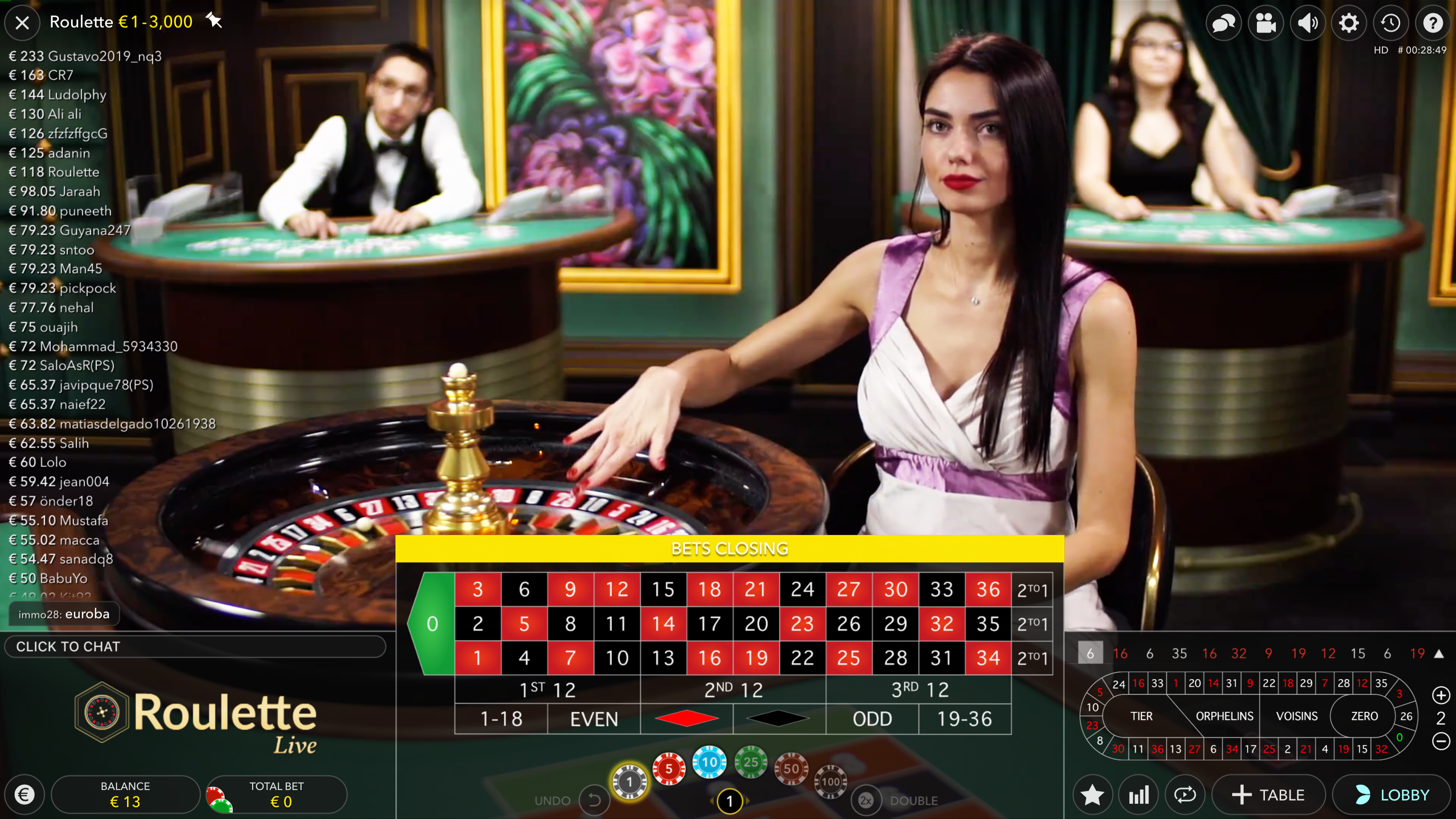
A: It’s a multiplier on your bet towards the WR. If a game has a 10% contribution, a $10 bet only counts as $1 toward clearing the bonus. Slots are usually 100%, table games like blackjack may be 5-20%. This dramatically increases the house edge when wagering on non-slot games. - Q: Are there detectable patterns in live dealer RNGs, like lightning roulette?
A: No. Live dealer games using a physical wheel and ball are subject to physical laws, but the winning number is determined at the moment the ball lands. “Lightning” multipliers are determined by a certified RNG at the start of each round. Patterns are a cognitive illusion (apophenia). - Q: What specific data points are encrypted in transit during gameplay?
A: All data packets are encrypted via TLS 1.2 or higher. This includes: bet size, game state, balance updates, personal messages in chat, and card distribution sequences. Your financial data is never transmitted during gameplay; only a session token is used. - Q: How does the “Auto-play” function algorithmically work on slots, and can it be audited?
A: Auto-play is a client-side instruction set that sends repeated spin commands with preset parameters (stop on win/loss limit). Each spin is still individually generated by the server RNG. The sequence cannot be pre-determined, making it auditable the same as manual spins. - Q: What are the exact network ports that must be open for stable live dealer streaming?
A: Live dealer streams typically use RTMP (Port 1935) or HLS (Port 80/443) protocols over TCP. If experiencing lag, ensure your firewall isn’t blocking these ports. Using a wired Ethernet connection over Wi-Fi can also reduce packet loss.
This technical manual demystifies the operational layer of the Casinonic platform. Success hinges on treating iGaming as a system of protocols—from the cryptographic security of your login to the mathematical model of bonuses. Prioritize verification, understand the cost of wagering, and utilize the troubleshooting frameworks provided. The platform’s tools, from the Casinonic app to the vast library of Casinonic slots, are neutral; their outcome is governed by mathematics, probability, and your disciplined adherence to the technical parameters outlined herein.